How to Air Fry Sea Scallops
Source: USDA food safety data + manufacturer guidelines · USDA safe temp: 145°F
AirFryerCharts · Compiled & reviewed ·
Avoid these 3 mistakes
The difference between crispy and soggy
See the 3 mistakes →
Step-by-step
- Preheat the air fryer to 400°F for 3 minutes. A screaming-hot basket is what builds the golden crust the instant the scallops touch down — a cold start lets them slowly turn opaque without ever searing.
- Pat 8–12 large sea scallops completely dry with paper towels, then pull off and discard the small side muscle from each. Do not salt them yet — salting early draws out moisture that ruins the sear.
- Brush the dry scallops with 1 teaspoon of oil and season with salt and pepper only just before cooking. The oil film carries the heat to the surface and is what triggers the Maillard browning.
- Arrange the scallops in a single layer with none touching. Overlapping scallops steam and lose the sear; work in two batches for a full pound.
- Air fry at 400°F for 6–8 minutes, flipping once at the 4-minute mark. The flip sears the second side, which would otherwise sit pale against the mesh while the top browns.
- Check at 6 minutes — the crust should be deep golden, the centers just opaque and pearly. Pull the moment the crust is set; scallops overcook to rubbery in about 60 seconds past this point.
Air fryer scallops deliver the one thing that makes a restaurant scallop special — a deeply golden, caramelized crust on the outside with a sweet, translucent, barely-set center that meltingly gives way the moment you bite. Sea scallops are notoriously hard to sear in a pan because the window between a perfect crust and an overcooked, rubbery puck is measured in seconds, and the air fryer's even, intense heat gives you a wider margin than a screaming-hot skillet. The trick is bone-dry scallops and a preheated basket, which is the entire formula for the Maillard browning that defines the dish. In under 8 minutes you have a $30-restaurant appetizer from a $8 seafood counter.

Why 400°F and 6–8 Minutes?
400°F (200°C) is the right temperature for scallops because you need the Maillard browning reaction to run fast enough to build the golden crust before the delicate center overcooks past the USDA-safe 145°F. At 375°F the scallops slowly turn opaque without ever developing the sear; at 425°F the surfaces scorch before the centers set. The 6–8 minute window is a ceiling, not a target — large sea scallops may be done at 6, and anything past 8 risks rubbery overcooking.
Pro tips
- Pat the scallops bone-dry and do not salt them until just before cooking — salt draws out moisture that ruins the sear
- Use large sea scallops (U10 or U15 size) for the best crust-to-center ratio; small bay scallops overcook instantly
- Pull the side muscle — that tough little tab on the side does not cook down and is chewy
- Arrange in a single layer with none touching — overlapping scallops steam and lose the sear
- Check at 6 minutes; scallops go from perfectly opaque to rubbery in about 60 seconds at the end
How to Tell When It's Done
Scallops are done when the top and bottom have a deep golden-brown crust, the centers are just opaque and pearly (no longer translucent grey), and they feel firm but springy when pressed — not hard or rubbery. The USDA safe minimum is 145°F (63°C) measured in the thickest part. Cut one open: the center should be opaque white with a slight translucent sheen, fully set but still tender. Scallops go from perfect to rubbery in about 60 seconds, so pull the moment the crust is golden.
Common mistakes
- Salting the scallops too early. Salt draws out moisture through osmosis and ruins the sear; season only just before they go into the basket.
- Overcooking past 145°F. Scallops turn rubbery in about 60 seconds past the safe minimum; pull the moment the crust is golden and the centers are just opaque.
- Leaving the scallops wet. Surface moisture turns to steam and prevents the Maillard browning; pat them completely dry with paper towels.
- Overcrowding the basket. Touching scallops steam and lose the sear; use a single layer with gaps and work in batches.
Serving Suggestions
Serve immediately while the crust is still crisp and the center melting — scallops cool fast and the texture suffers. A squeeze of lemon, a drizzle of garlic butter, or a spoonful of a bright pan sauce are the classic partners. Plate them over risotto or pasta, or serve them as an appetizer with a dipping sauce. They pair naturally with a starchy side and something green.
Pairs well with: Asparagus, Garlic Bread
Times and temperatures verified against USDA FSIS safe minimum internal temperatures and manufacturer cooking charts (Ninja, Cosori, Instant Pot Vortex). Every air fryer runs slightly hot or cool — treat these as starting points and adjust ±2 minutes to taste.
Sea Scallops air fryer FAQ
How do I get a golden crust on air fryer scallops?
Two things matter most. Pat the scallops completely bone-dry with paper towels — surface moisture turns to steam and prevents the Maillard browning that creates the crust. And do not salt them until just before cooking, because salt draws out moisture through osmosis. Brush the dry scallops with oil, season, and drop them onto a preheated 400°F basket so they sear the instant they land.
Why are my air fryer scallops rubbery?
You overcooked them. Scallops go from perfectly tender to rubbery in about 60 seconds because the proteins tighten and squeeze out their moisture. Pull the moment the crust is golden and the centers are just opaque — at 145°F, not a degree more. Large sea scallops are usually done at 6 minutes; trust the visual cues over the timer.
What is the side muscle on a scallop?
It is a small, tough, rectangular tab of tissue attached to the side of the scallop, and it does not cook down — it stays chewy and fibrous no matter how long you cook. Pinch it with your fingers and pull it off before cooking; it tears away cleanly. Most store-bought scallops still have it attached, so check each one.
Can I cook bay scallops in the air fryer?
Bay scallops are much smaller than sea scallops and cook through almost instantly, making them hard to sear without overcooking. For the air fryer, sea scallops (U10 to U15 size) are the right choice — they are large enough to develop a crust before the center overcooks. If you only have bay scallops, thread them onto skewers to make them easier to handle and cook at 400°F for just 4–5 minutes.
More Seafood
 400°F
400°F
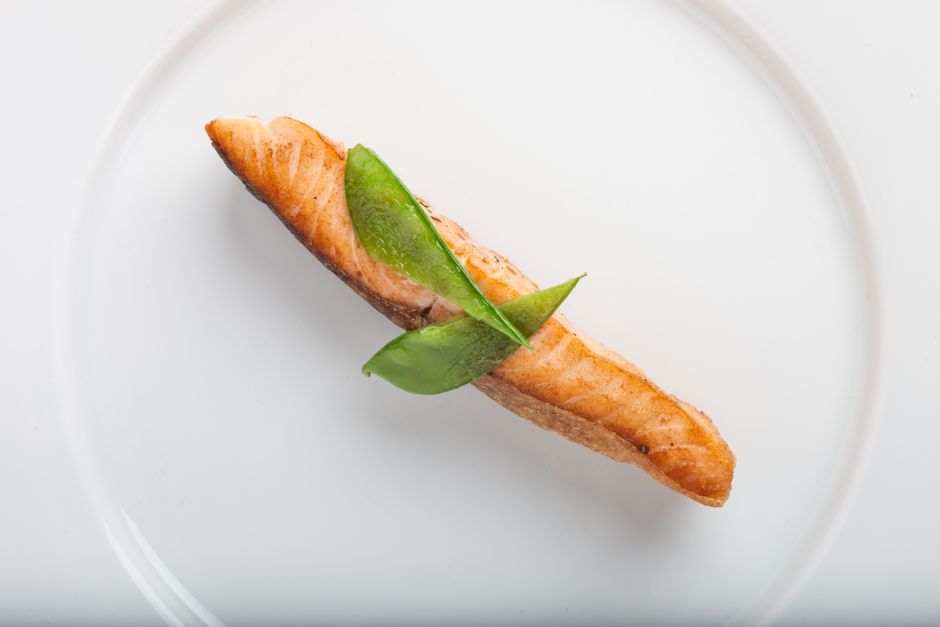
Salmon Fillet
Skin-on, 6 oz fillet. Skin gets irresistibly crispy.
 400°F
400°F
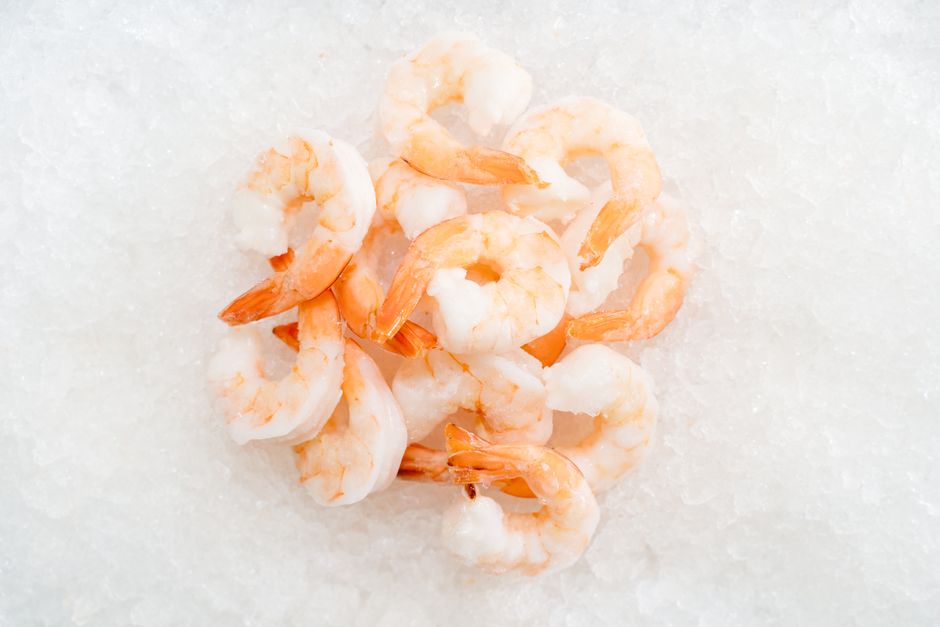
Shrimp (large)
Toss with Old Bay + oil. Curl = done. USDA: cook shrimp to 145°F or until flesh is pearly/opaque.
 400°F
400°F
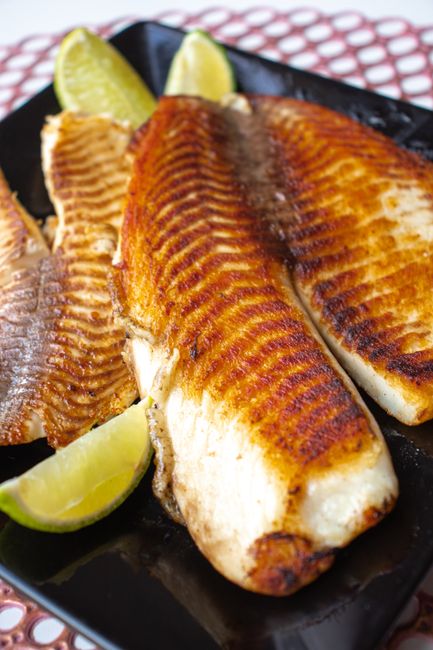
Tilapia Fillet
Mild, flaky white fish. Coat with panko for a crispy crust.