
How to Air Fry Chicken Wings
Source: USDA food safety data + manufacturer guidelines · USDA safe temp: 165°F
AirFryerCharts · Compiled & reviewed ·
Avoid these 3 mistakes
The difference between crispy and soggy
See the 3 mistakes →
Step-by-step
- Preheat the air fryer to 400°F for 3 minutes. A screaming-hot basket is what starts rendering the subcutaneous fat the instant the wings touch down, instead of letting the skin slowly poach in its own grease.
- Pat 2 pounds of wings completely dry, then toss with 1 tablespoon of baking powder (not baking soda), 1 teaspoon of salt, and ½ teaspoon of black pepper until evenly dusted. The baking powder raises skin pH to accelerate dehydration and crisping.
- Arrange the wings in a single layer, skin-side up, with a small gap between each. Stacked wings steam instead of crisp; if you have more than fit loosely, cook a second batch rather than piling.
- Air fry at 400°F for 22–25 minutes, opening the basket to shake thoroughly every 7–8 minutes. The shakes reposition each wing so every surface gets a turn under the direct top heat.
- At the 22-minute mark, check the largest drumettes — the skin should be blistered and deep golden, the joint should give when twisted, and the meat should read 165°F. Give the palest wings 2–3 more minutes.
- Transfer to a bowl and toss with ¼ cup of warmed sauce immediately, while the skin is still hot and the fat is still rendering — this is the moment the sauce sticks instead of sliding off.
Air fryer wings are the strongest argument for owning the machine, full stop. The circulating hot air does what a 425°F oven only pretends to: it reaches into the creases and folds of each wing, rendering the stubborn subcutaneous fat and desiccating the skin into a glassy, crackling shell while the meat underneath stays genuinely juicy. With a tablespoon of baking powder and a 25-minute cook you get restaurant-quality crispness — the kind that audibly shatters when you bite it — without deep-frying, without splattering a quart of oil across your stove, and without the rubbery, pale skin that baked wings are famous for. Tossed in buffalo or garlic-parmesan at the end, they are the only party food you need.

Why 400°F and 22–25 Minutes?
400°F (200°C) is non-negotiable for wings because the goal is not just to cook the meat but to render the thick pad of fat trapped between the skin and the muscle, and fat does not render in earnest below 375°F. At 400°F the skin dehydrates fast enough to crisp before the meat overcooks; drop to 360°F and you get flabby, rubbery skin no matter how long you wait. The 22–25 minute window is long enough for the baking-powder-treated skin to dry out and blister but short enough that the dual-muscle wing stays juicy down to the bone.
Pro tips
- Toss with 1 tbsp baking powder (not soda) per 2 pounds — it raises the skin's pH so it dehydrates and crisps instead of steaming
- Pat the wings bone-dry after the baking powder coat; the drier the skin going in, the shatter-crisper it comes out
- Keep the temperature at 400°F — wings need the higher heat to render the thick fat layer under the skin into a crackling shell
- Toss in sauce only after cooking, never before — sugary sauce at 400°F burns to carbon in under 4 minutes
- Shake the basket every 7–8 minutes so every surface gets a turn under the direct top heat
How to Tell When It's Done
Wings are done when the skin is a deep mahogany with blistered, almost translucent patches, the drumettes pull away cleanly from the joint with a gentle twist, and the meat at the thickest part reads 165°F (74°C) — the USDA safe minimum for poultry. Because wings are forgiving dark meat, a few minutes past 165°F only makes them more tender rather than drying them out. Visually, any sign of translucence or jelly-like fat under the skin means keep going; the skin should look dry, tight, and audibly hard when tapped with tongs.
Common mistakes
- Saucing before cooking. Sugary sauces incinerate at 400°F; cook the wings plain to a crisp shell and toss in warm sauce at the very end.
- Running the temperature below 400°F. Wings need that heat to render the fat pad under the skin; a lower temp leaves the skin permanently rubbery.
- Leaving the wings wet before coating. Surface moisture becomes steam, and steam is the opposite of crisp — pat bone-dry before the baking powder goes on.
- Overcrowding the basket. Stacked wings trap steam and render fat onto each other instead of into the air; cook in a single layer and work in batches.
Serving Suggestions
Toss the hot wings in ¼ cup of warmed buffalo, garlic-parmesan, or honey-sriracha sauce immediately out of the basket so the residual heat flash-coats every surface without softening the skin. Serve within 10 minutes, because the crisp crust surrenders to moisture as it sits. Round out the plate with a starchy side and a cool crunch to balance the heat and soak up the extra sauce.
Pairs well with: Frozen French Fries, Corn on the Cob
Times and temperatures verified against USDA FSIS safe minimum internal temperatures and manufacturer cooking charts (Ninja, Cosori, Instant Pot Vortex). Every air fryer runs slightly hot or cool — treat these as starting points and adjust ±2 minutes to taste.
Chicken Wings air fryer FAQ
Why use baking powder on air fryer wings?
Baking powder (not baking soda) raises the pH of the skin, which speeds up dehydration and browning so the skin turns glassy and crisp instead of rubbery. Use 1 tablespoon per 2 pounds of wings, tossed on dry. Aluminum-free baking powder avoids any metallic taste, and the effect is the closest thing to a deep-fried wing without the oil.
Why are my air fryer wings rubbery?
Two causes. First, the heat was too low — wings need 400°F to render the subcutaneous fat; at 360°F the fat never fully renders and the skin stays chewy. Second, the skin was wet going in — pat the wings completely dry, because surface moisture turns to steam and steamed skin never crisps, no matter how long you cook.
Should I sauce wings before or after cooking?
Always after. Buffalo, barbecue, and honey-garlic sauces are loaded with sugar that burns to bitter carbon at 400°F in under 4 minutes. Cook the wings plain to shatter-crisp, then toss them in warmed sauce in a bowl the moment they leave the basket so the heat flashes the coating on.
Can I cook frozen wings in the air fryer?
Yes, and they crisp well. Do not thaw — cook straight from frozen at 380°F for 12 minutes to render the ice, then raise to 400°F for 12–15 more minutes until the skin is blistered and the meat reads 165°F. Expect a slightly less shatter-crisp skin than fresh, but a faster and cleaner result than the oven.
More Meat & Poultry
Popular across all foods
 400°F
400°F
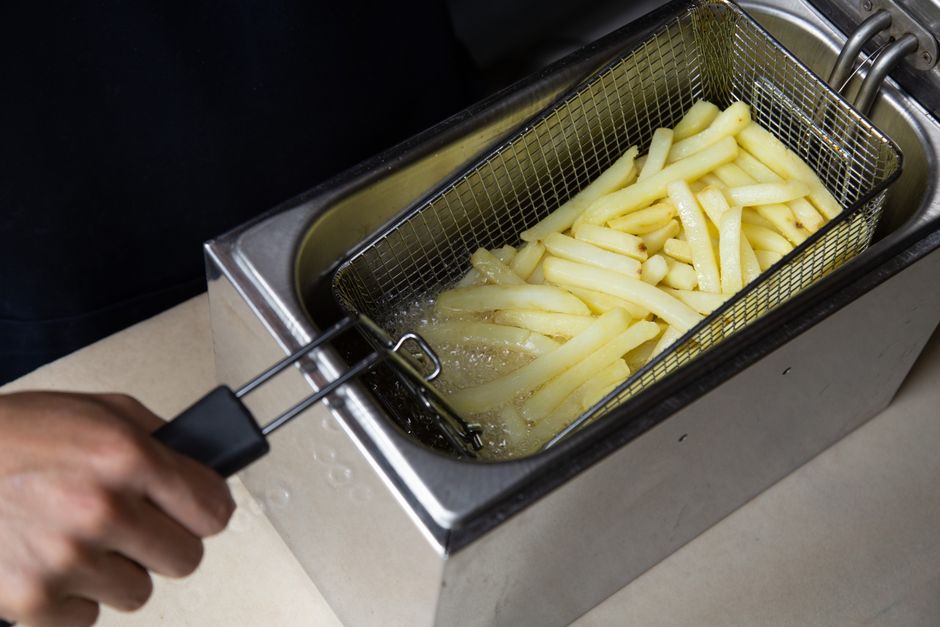
Frozen French Fries
No oil needed — they're pre-fried. The classic air-fryer win.
 400°F
400°F
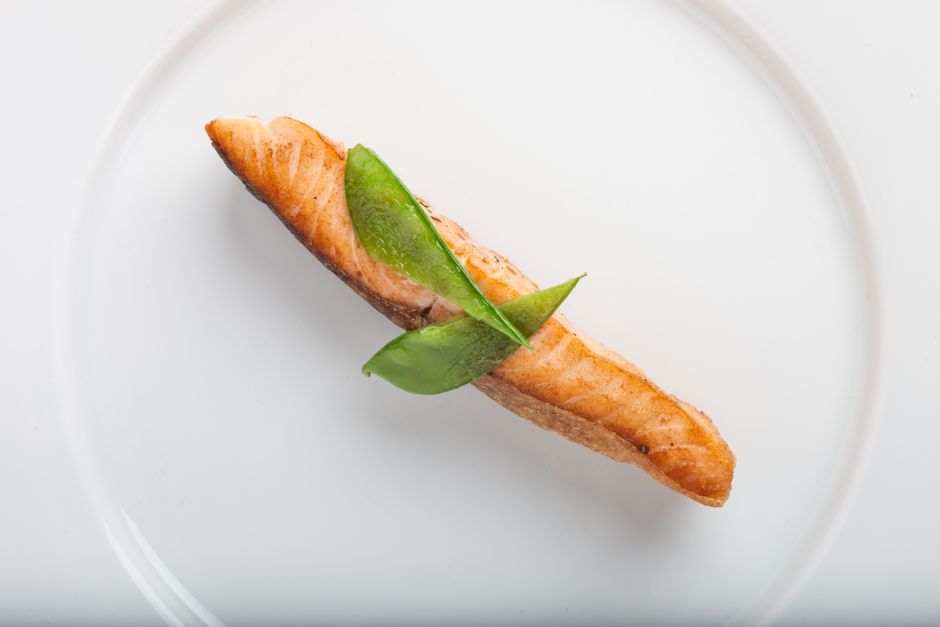
Salmon Fillet
Skin-on, 6 oz fillet. Skin gets irresistibly crispy.
 350°F
350°F
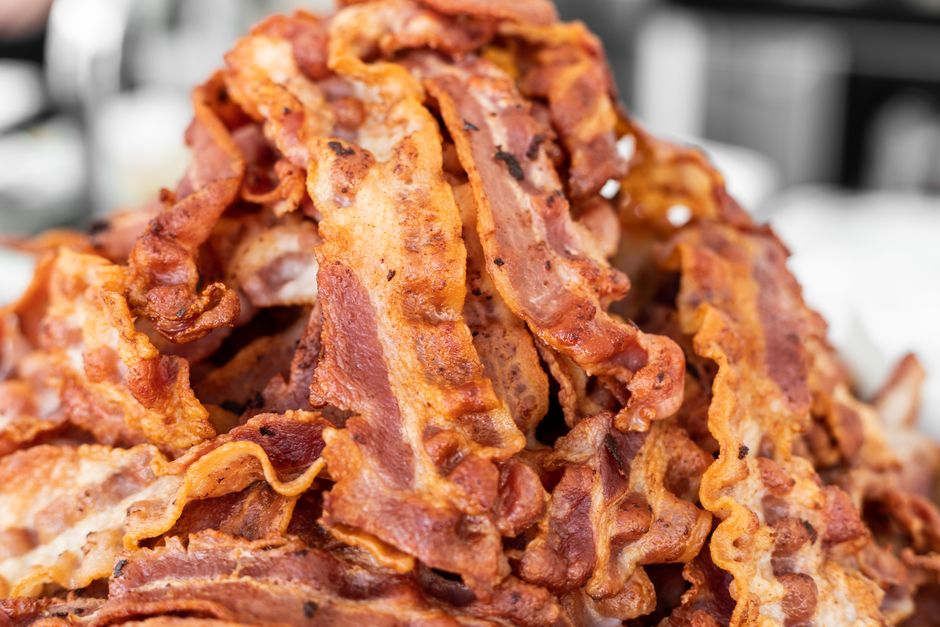
Bacon
Thick-cut needs 2 extra minutes. No splatter, no flipping. Cook until crisp (visually done; 145°F is USDA pork minimum).