How to Air Fry Asparagus
Source: USDA food safety data + manufacturer guidelines
AirFryerCharts · Compiled & reviewed ·
Avoid these 3 mistakes
The difference between crispy and soggy
See the 3 mistakes →
Step-by-step
- Preheat the air fryer to 400°F for 3 minutes. A hot basket creates the immediate char on the tips that defines good asparagus — a cold start lets the spears slowly wilt and steam.
- Snap the woody bottom ends off each spear by bending until it breaks naturally, about 1–2 inches from the base. The spear knows where the tender part ends and the tough part begins, so trust the snap.
- Pat the spears dry, then toss with 1 teaspoon of olive oil, ¼ teaspoon of salt, and a pinch of lemon zest until evenly coated. The oil carries the heat and seasoning; the zest brightens the flavor.
- Arrange the spears in a single layer pointing the same direction, with none overlapping. Crossing spears trap steam and the overlapping spots stay pale and limp.
- Air fry at 400°F for 6–8 minutes. There is no need to flip; the circulating hot air chars the tips and tenderizes the stems evenly from all sides.
- Check at 6 minutes — the tips should be charred in spots, the stems bright green and tender-crisp. Pull now for a firmer snap, or give it 1–2 more minutes for deeper char.
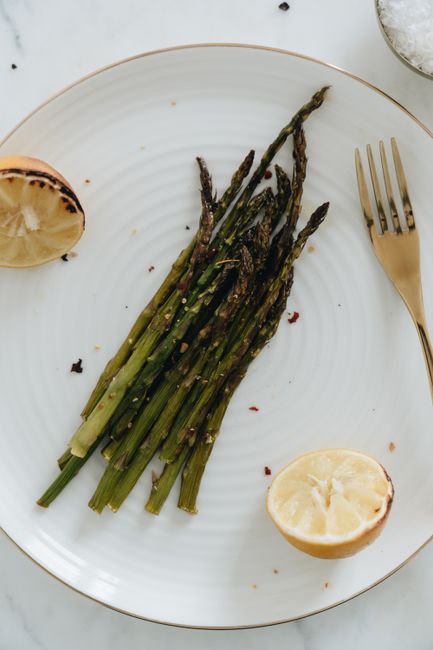
Air fryer asparagus is the fastest path to a side dish that tastes like it came off a grill — blistered, charred tips with a slight snap, tender stems, and a bright, grassy flavor that steaming and boiling wash away. The forced convection hits the delicate spears from every angle, caramelizing the tips into those sought-after charred spots while the stems steam in their own moisture and stay tender. It is done in 6–8 minutes, faster than the oven can preheat, and the intense dry heat concentrates the flavor rather than diluting it the way boiling does. A snap of the woody ends, a toss with oil and salt, and you have a vegetable that tastes like spring.
Why 400°F and 6–8 Minutes?
400°F (200°C) is the right call for asparagus because the thin, delicate spears need aggressive but brief heat to char the tips without turning the stems to mush. At 375°F the spears slowly wilt without browning and lose their snap; at 425°F the tips burn before the stems tenderize. The 6–8 minute window is short precisely because asparagus is mostly water and cooks through fast — push past 10 minutes and you get shriveled, leathery spears with no texture left.
Pro tips
- Snap off the woody bottom ends by bending each spear — it naturally breaks where the tender part begins
- Use thin spears, not thick — thin asparagus crisps and chars in minutes while thick ones stay fibrous
- Toss with just 1 teaspoon of oil per bunch; too much makes the spears greasy and limp
- Arrange the spears in a single layer pointing the same direction so none overlap and trap steam
- Check at 6 minutes — thin spears go from crisp to shriveled in under a minute at the end
How to Tell When It's Done
Asparagus is done when the tips are charred in spots with dark blistered patches, the stems are bright green and tender-crisp (they should bend slightly but still offer resistance when bitten), and a knife pierces the thickest stem with just a little push. Unlike meat, there is no internal temperature to hit — this is a visual and tactile call. If the tips are black and the stems are mushy, you cooked too long; if the spears are bright green but pale and raw-tasting, give it another minute.
Common mistakes
- Using thick spears. They hold too much water and stay fibrous; thin asparagus chars and crisps in minutes — choose thin spears for the air fryer.
- Overcrowding the basket. Crossing spears trap steam and the overlapping spots stay pale and limp; arrange them in a single layer pointing one direction.
- Leaving the spears wet. Surface moisture turns to steam and prevents the charred tips; pat them dry before oiling.
- Overcooking past 8 minutes. Asparagus goes from crisp to shriveled fast; pull when the tips are charred and the stems still have a snap.
Serving Suggestions
Serve immediately while the tips are still charred and the stems snap — asparagus softens fast as it sits. A squeeze of lemon, a shower of parmesan, or a drizzle of balsamic glaze are the classic finishes. It pairs naturally with steak, salmon, or eggs, and the charred spears make a great addition to a pasta or grain bowl.
Pairs well with: Ribeye / Sirloin Steak, Salmon Fillet
Times and temperatures verified against USDA FSIS safe minimum internal temperatures and manufacturer cooking charts (Ninja, Cosori, Instant Pot Vortex). Every air fryer runs slightly hot or cool — treat these as starting points and adjust ±2 minutes to taste.
Asparagus air fryer FAQ
Should I peel asparagus before air frying?
No, just snap off the woody ends. Peeling is an old fine-dining trick for thick, tough spears, but thin air-fryer asparagus does not need it. Bend each spear near the base and it will snap naturally where the tender part meets the tough, woody stem — that is cleaner and faster than peeling.
Why is my air fryer asparagus soggy?
Usually the spears were too thick, the basket was overcrowded, or they were wet going in. Thick spears hold too much water and steam instead of char; use thin spears. Overlapping traps steam; arrange in a single layer pointing the same direction. And pat the spears dry before oiling, since surface moisture prevents the charred tips.
Do I need to flip asparagus in the air fryer?
No. The circulating hot air chars the tips and tenderizes the stems evenly from all sides, so there is no need to flip. Flipping thin spears is fiddly and tends to break them. Just arrange in a single layer and let the convection do the work.
Can I air fry thick asparagus spears?
You can, but they will not char and crisp the way thin ones do. Thick spears hold more water and stay fibrous in the time it takes to brown, so they tend to steam instead of roast. If thick is all you have, peel the lower half of each stem, add 1–2 minutes to the cook time, and expect a softer, less charred result than thin spears give.