How to Air Fry Pork Belly Slices
Source: USDA food safety data + manufacturer guidelines · USDA safe temp: 160°F
AirFryerCharts · Compiled & reviewed ·
Avoid these 3 mistakes
The difference between crispy and soggy
See the 3 mistakes →
Step-by-step
- Preheat the air fryer to 400°F for 3 minutes. A hot basket starts rendering the thick fat cap on contact; a cold start leaves the fat solid and the skin rubbery.
- Score the skin of a 1.5-inch pork belly slice in parallel lines ¼ inch apart, cutting through the rind but stopping at the fat. Rub the skin with 1 teaspoon of vinegar or lemon juice and 1 teaspoon of kosher salt. The scoring and acid are what let the skin blister and puff into crackling.
- Place the slices skin-side up in a single layer with a gap between each. Skin-up lets the top heat dry and blister the scored rind while the underside browns in the rendered fat below.
- Air fry at 400°F for 18–22 minutes. The basket will fill with rendered fat — that is the goal, not a problem, and it is what shallow-fries the meat side of each slice.
- At the 18-minute mark, check the crackling: it should be puffed, blistered, and a deep golden. If the skin is still pale and leathery, give it 2–3 more minutes of direct top heat.
- Pull the slices when the skin crackles audibly when tapped and the meat reads 160°F. Rest 3–4 minutes so the crackling firms up, then serve immediately while the skin is at its crunchiest.
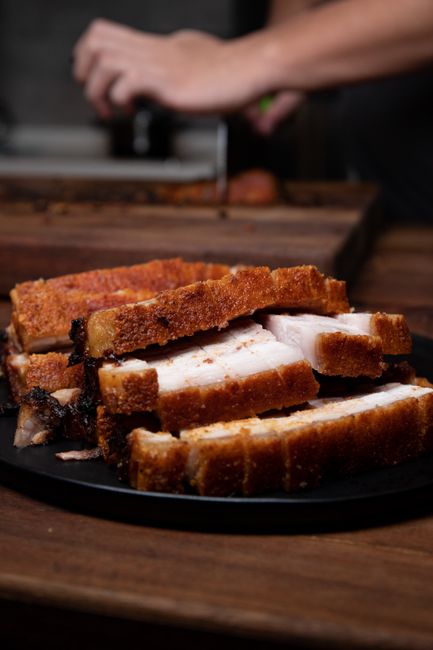
Pork belly is the cut that makes the air fryer earn its counter space, because the two things it does best — render fat and dry out a surface into a crisp shell — are exactly what pork belly needs. The belly is layered meat, fat, and skin, and the goal is to melt that thick fat cap so the meat turns silky and tender while the skin transforms into a blistered, shatter-crisp crackling on top. The forced convection does both at once: the hot, dry air penetrates the layer of fat and renders it down into the tray, while the same air dehydrates the scored skin into a puffed, golden crackling. The result is a strip of belly with crunchy crackling on top, meltingly soft fat in the middle, and tender meat underneath.
Why 400°F and 18–22 Minutes?
400°F (200°C) is the right temperature for pork belly because the thick fat cap needs serious heat to render down into the basket, and the skin needs dry, high heat to dehydrate and blister into crackling. Below 375°F the fat never fully melts — leaving the meat tough and the skin rubbery — and below 350°F the skin will not puff at all. At 400°F the fat renders at the same pace the skin crisps, so the whole strip finishes evenly. The 18–22 minute window covers slices about 1.5 inches thick; thicker slabs need a longer cook.
Pro tips
- Score the skin in parallel lines ¼ inch apart, cutting through the rind but not into the fat — these channels are where the skin blisters and puffs into crackling
- Dry-brine overnight with 1 tsp kosher salt per pound, uncovered in the fridge; the open air dehydrates the skin so it crisps instead of steaming
- Rub the scored skin with 1 tsp of vinegar or lemon juice before salting — the acid lowers the pH and helps the skin puff and blister
- Cook at 400°F so the thick fat renders out into the basket; below 375°F the fat never fully melts and the meat stays tough
- Flip the slices skin-side up for the final 5 minutes so the top heat finishes blistering the crackling directly
How to Tell When It's Done
Pork belly slices are done when the skin is puffed, blistered, and a deep golden crackling, the fat layer has turned translucent and soft (not white and rubbery), and the meat reads 160°F (71°C) on a quick-read thermometer. The USDA safe minimum for pork is 145°F, but belly is best pushed to 160°F, where the abundant fat and connective tissue have fully rendered and the meat turns meltingly tender. Tap the crackling with tongs — it should sound hollow and crack audibly, not feel leathery or bend.
Common mistakes
- Leaving the skin unscored. Without scoring channels, the rind has nowhere to expand and stays rubbery; score in parallel lines ¼ inch apart through the rind.
- Running the heat below 400°F. The thick fat cap needs serious heat to render; lower temperatures leave the meat tough and the skin permanently leathery.
- Cooking only to the 145°F pork minimum. Belly is best pushed to 160°F, where the fat and collagen fully melt into a silky, tender texture.
- Skipping the rest. Crackling softens if you cut in immediately; rest 3–4 minutes so the skin re-firms to full crunch before serving.
Serving Suggestions
Rest the slices for 3–4 minutes so the crackling firms to full crunch and the rendered fat settles, then serve immediately while the skin still shatters. Pork belly loves bold partners: a drizzle of sweet chili sauce, a scoop of steamed rice, pickled vegetables to cut the richness, or a pile of crisp stir-fried greens. Eat the crackling first, while it is at its peak.
Pairs well with: Broccoli Florets, Green Beans
Times and temperatures verified against USDA FSIS safe minimum internal temperatures and manufacturer cooking charts (Ninja, Cosori, Instant Pot Vortex). Every air fryer runs slightly hot or cool — treat these as starting points and adjust ±2 minutes to taste.
Pork Belly Slices air fryer FAQ
How do I get crispy crackling on pork belly?
Three steps. Score the skin in parallel lines ¼ inch apart, cutting through the rind but not into the fat — these channels are where the skin blisters and puffs. Rub the skin with vinegar or lemon juice and salt to lower the pH, which helps the skin puff. And cook at 400°F so the skin dehydrates and blisters rather than steaming. Dry-brining the slab uncovered in the fridge overnight dehydrates the skin further and is the real secret.
Why is my pork belly skin rubbery instead of crispy?
Three causes. The skin was wet going in — pat it completely dry, because surface moisture steams the skin instead of crisping it. The heat was too low — belly needs 400°F so the skin dehydrates and blisters. Or you did not score the skin, so the rind has nowhere to expand and puff. Score the skin, dry-brine it uncovered overnight, and hit it with 400°F top heat for the crackling to work.
Why is the meat on my pork belly tough?
Because the fat and connective tissue did not fully render. Pork belly needs the USDA-safe 145°F at minimum, but it is best pushed to 160°F, where the abundant collagen and fat melt into gelatin and leave the meat meltingly tender. Cooking it too briefly or at too low a temperature leaves the fat white and rubbery and the meat tight. Give it the full 18–22 minutes at 400°F and probe for 160°F.
What do I do with all the rendered fat in the basket?
Pour it through a fine strainer into a heatproof jar and save it — pork fat, or lard, is one of the best cooking fats there is. Use a spoonful to roast potatoes or Brussels sprouts (they come out incomparably crisp), fry eggs, sauté greens, or make refried beans. Stored airtight in the fridge, rendered pork fat keeps for months and adds deep savor to anything you cook in it.