How to Air Fry Bone-In Chicken Thighs
Source: USDA food safety data + manufacturer guidelines · USDA safe temp: 175°F
AirFryerCharts · Compiled & reviewed ·
Avoid these 3 mistakes
The difference between crispy and soggy
See the 3 mistakes →
Step-by-step
- Preheat the air fryer to 400°F for 3 minutes. A hot basket starts rendering the subcutaneous fat the moment the skin touches the mesh — a cold start leaves the skin rubbery and pale.
- Pat 4 bone-in, skin-on thighs completely dry, then season generously: 1 teaspoon of kosher salt, ½ teaspoon of pepper, and 1 teaspoon of smoked paprika per pound. Dry skin plus salt is what makes the surface blister and crisp.
- Place the thighs skin-side down in a single layer with a gap between each. Skin-down first lets the fat render directly onto the hot mesh, where it fries the skin from below while the air crisps it from above.
- Air fry at 400°F for 12 minutes undisturbed, then flip the thighs skin-side up. The first long stretch gives the skin sustained contact with the hot mesh to blister; flipping exposes the meat-side to the top heat.
- Continue cooking for another 8–12 minutes. At the 20-minute total mark, probe the thickest thigh next to (not touching) the bone — you are looking for 175°F to dissolve the collagen and turn the meat silky.
- Pull the thighs at 175°F (or 185°F if you want falling-apart tenderness), rest for 5 minutes loosely tented with foil, and serve skin-side up so the crust stays crackling.
Bone-in, skin-on chicken thighs are the cut the air fryer was built for, and once you cook them this way you will not go back to the oven. The dark meat is forgiving in a way breast never is — packed with collagen and intramuscular fat, it actually gets better the longer it cooks, turning silky and gelatinous where white meat turns to chalk. The forced hot air renders the thick skin into a crackling, golden shell while the circulatory heat penetrates the bone and joint, so the meat near the bone finishes at the same moment as the surface. The result is a thigh with shatter-crisp skin on top, juicy meat through the middle, and a deeply browned underside — all in under 25 minutes.
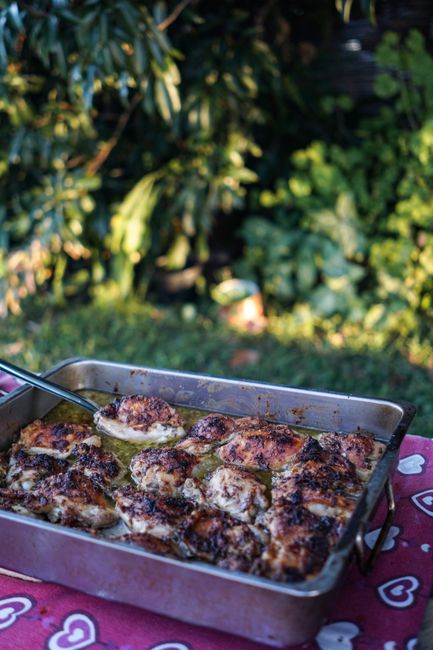
Why 400°F and 20–24 Minutes?
400°F (200°C) is the right temperature for bone-in thighs because you need serious heat for two jobs at once: rendering the thick pad of fat under the skin into a crisp shell, and raising the meat's internal temperature high enough — 175°F — to melt the collagen that makes dark meat tough. At 360°F the skin never fully crisps and the meat stays tight; at 400°F the skin blisters golden in the same window the collagen dissolves. The 20–24 minute range gives the bone-joint, the slowest-cooking part, time to finish alongside the surface.
Pro tips
- Cook bone-in thighs past the 165°F poultry minimum — the dark meat is laced with collagen that only melts at 175°F, leaving the meat silky instead of tough
- Dry the skin as thoroughly as you can, then leave the thighs uncovered in the fridge for 8–24 hours for a dry-brine that dehydrates the skin further for maximum crispness
- Place the thighs skin-side down first, so the fat renders out of the skin into the basket and the underside sears in it
- Resist turning the thighs for the first 12 minutes — the skin needs sustained contact with the hot mesh to crisp before you flip
- Pull at 175°F for tender, or 185°F for the falling-apart, melt-in-the-mouth texture if you prefer
How to Tell When It's Done
Bone-in thighs are done when the skin is deep golden and blistered, the meat has pulled back from the bone exposing about ½ inch of the drum, and an instant-read thermometer in the thickest part of the meat (avoiding the bone) reads 175°F (80°C). The USDA safe minimum is 165°F, but dark meat needs the extra 10 degrees to dissolve its collagen — at 175°F the meat turns silky and the juices run clear rather than pink-tinged. Press the meat: it should feel tender and yielding, not springy or firm.
Common mistakes
- Pulling at 165°F like it is a breast. Dark meat needs 175°F to melt its collagen; at the poultry safe minimum the thigh is safe but tight and less silky than it should be.
- Starting on a cold or low basket. Thighs need 400°F from the first second to render the fat under the skin; a slow start poaches the skin in its own grease and leaves it rubbery.
- Disturbing the skin too early. The skin needs sustained contact with the hot mesh to blister; flipping or poking before the 12-minute mark tears the skin off in patches.
- Skipping the rest. Cutting into a hot thigh sends the juices onto the board; 5 minutes loosely tented lets them reabsorb so each bite is glossy and moist.
Serving Suggestions
Let the thighs rest for 5 minutes so the skin stays crisp and the juices settle, then serve whole over a bed of rice, couscous, or a sturdy grain that catches the rendered fat and juices. A squeeze of lemon or a spoonful of yogurt-tahini sauce cuts the richness. The crisp skin is the prize — eat it first, while it still shatters.
Pairs well with: Broccoli Florets, Corn on the Cob
Times and temperatures verified against USDA FSIS safe minimum internal temperatures and manufacturer cooking charts (Ninja, Cosori, Instant Pot Vortex). Every air fryer runs slightly hot or cool — treat these as starting points and adjust ±2 minutes to taste.
Bone-In Chicken Thighs air fryer FAQ
Why 175°F for thighs when 165°F is the poultry safe minimum?
Because dark meat is loaded with collagen that stays tough below 175°F. The USDA says 165°F is safe to eat, but thighs pulled at 165°F are firm, slightly tight, and less juicy. Push to 175–185°F and the collagen melts into gelatin, leaving the meat silky, glossy, and tender. Dark meat forgives the extra heat — it cannot really dry out the way breast does.
How do I get the skin crispy instead of rubbery?
Three things. Dry the skin thoroughly with paper towels. Salt it and leave the thighs uncovered in the fridge for 8–24 hours to dehydrate further. And cook at 400°F so the fat actually renders — at lower temperatures the fat sits under the skin and turns it rubbery instead of crackling.
Can I use boneless skinless thighs instead?
Yes, and they are more forgiving than breast. Reduce the time to 14–16 minutes at 380°F and pull at 165°F. You lose the crisp-skin payoff, but the collagen-rich dark meat stays juicy and tender even fully cooked, making boneless thighs a great choice for slicing into salads or bowls.
Should I flip the thighs during cooking?
Yes, once. Start skin-side down for the first 12 minutes so the fat renders directly onto the hot mesh and fries the skin from below, then flip skin-side up so the top heat finishes the crisping and browns the meat side. Skipping the flip leaves one side pale and steamed.