How to Air Fry Butternut Squash Cubes
Source: USDA food safety data + manufacturer guidelines
AirFryerCharts · Compiled & reviewed ·
Avoid these 3 mistakes
The difference between crispy and soggy
See the 3 mistakes →
Step-by-step
- Preheat the air fryer to 400°F for 3 minutes. A hot basket starts caramelizing the cut faces immediately — a cold start lets the cubes slowly sweat and steam instead of browning.
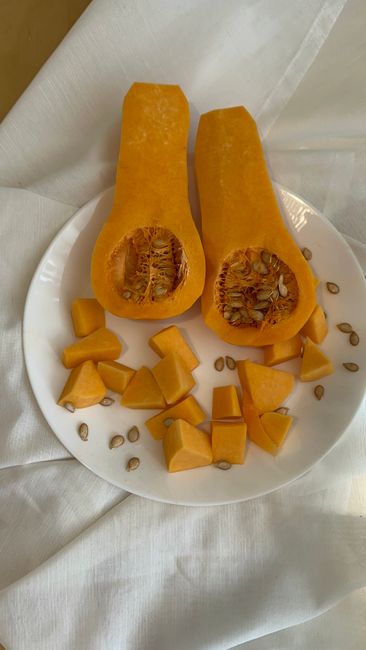
- Peel a butternut squash thoroughly, scoop out the seeds, and cut the flesh into uniform ½-inch cubes. Uniform size is non-negotiable: large cubes stay raw while small ones char.
- Toss the cubes with 1 tablespoon of olive oil, ½ teaspoon of salt, and ¼ teaspoon of cinnamon until evenly coated. The oil carries the heat and is what creates the caramelized crust.
- Arrange in a single layer with the cubes barely touching. Overlapping traps steam and the contact points stay pale and dense; work in two batches for a full squash.
- Air fry at 400°F for 15–18 minutes, flipping the cubes once at the 10-minute mark. The flip exposes all sides to the direct heat so they caramelize evenly instead of one face browning while the rest stay pale.
- Drizzle with 1 tablespoon of maple syrup and toss in the final 3 minutes of cooking. The sugar caramelizes into a glaze in those last minutes; add it earlier and it burns to carbon at 400°F.
Air fryer butternut squash turns a dense, hard-to-cut vegetable into caramelized, brown-sugar-sweet cubes with crisp, golden edges and a fluffy, meltingly tender center. The forced convection does what a slow oven only approximates: it concentrates the squash's natural sugars by evaporating surface moisture fast, caramelizing the cut faces into deep brown crusts while the dense flesh steams in its own juice and turns silky. A toss with oil, maple, and cinnamon in the final minutes builds a glazed, candy-like finish that plays off the savory caramelization. It is the side dish that tastes like dessert, done in under 20 minutes.
Why 400°F and 15–18 Minutes?
400°F (200°C) is the target for butternut squash because the dense, starchy flesh needs aggressive heat to cook through and caramelize, and the natural sugars need to brown without burning. At 375°F the cubes slowly dehydrate and soften without ever developing the caramelized crust; at 425°F the sugary edges scorch before the dense centers tenderize. The 15–18 minute window reflects how long it takes the hard flesh to transform into a fluffy, melting texture.
Pro tips
- Cut uniform ½-inch cubes so they finish at the same time — larger cubes stay raw while smaller ones char
- Toss with just 1 tablespoon of oil per pound; the squash is dense and needs the oil to carry heat and brown
- Add maple syrup or brown sugar only in the final 3 minutes — the sugar burns to carbon at 400°F in under 5 minutes
- Flip the cubes once at the 10-minute mark so all six sides caramelize evenly
- Peel thoroughly — the tough skin does not soften and is unpleasant to eat even after roasting
How to Tell When It's Done
Butternut squash is done when the cut faces are deeply caramelized with dark brown patches, the edges are crisp and slightly shrunken, and a fork pierces the center of a cube with just a little push — the flesh should be tender and fluffy, not hard or dense. Unlike meat, there is no internal temperature to hit — this is a visual and tactile call. If the edges are black and the centers are still hard, the heat was too high or the cubes were cut too large.
Common mistakes
- Skipping the peel. Butternut skin is tough and stays fibrous even after roasting; peel thoroughly before cubing.
- Adding maple syrup at the start. Sugary glazes burn to carbon at 400°F; add them only in the final 3 minutes.
- Cutting uneven cube sizes. Large cubes stay raw while small ones char; aim for uniform ½-inch cubes.
- Overcrowding the basket. Touching cubes trap steam and the contact points stay pale and dense; use a single layer with gaps.
Serving Suggestions
Serve immediately while the edges are still caramelized and crisp — the glaze softens as it sits. A shower of toasted pecans or a crumble of goat cheese plays beautifully off the sweetness, and a sprinkle of fresh sage adds a savory counterpoint. It pairs naturally with roasted pork or chicken, and the sweet cubes make a great addition to a fall salad or grain bowl.
Pairs well with: Pork Tenderloin, Bone-In Chicken Thighs
Times and temperatures verified against USDA FSIS safe minimum internal temperatures and manufacturer cooking charts (Ninja, Cosori, Instant Pot Vortex). Every air fryer runs slightly hot or cool — treat these as starting points and adjust ±2 minutes to taste.
Butternut Squash Cubes air fryer FAQ
Do I need to peel butternut squash before air frying?
Yes, peel it thoroughly. Unlike delicata or acorn squash, butternut skin is tough and fibrous and does not soften enough to eat even after roasting. Use a vegetable peeler to strip the pale outer layer, then cut the bright orange flesh into cubes. The peeled cubes caramelize evenly and have a far better texture than unpeeled ones.
Why are my air fryer butternut squash cubes hard in the middle?
Either undercooked or cut too large. The dense, starchy flesh needs the full 15–18 minutes at 400°F to transform into a fluffy, tender texture; below that it stays hard and dense. Also check your cube size — anything larger than ½-inch will char on the outside before the center tenderizes. Cut uniform ½-inch cubes and confirm doneness by piercing one with a fork.
When should I add maple syrup or sugar to the squash?
Only in the final 3 minutes of cooking. Sugary glazes burn to bitter carbon at 400°F in under 5 minutes, so if you add them at the start you get black, acrid cubes. Toss the nearly-cooked squash with maple syrup or brown sugar in the last 3 minutes and it will caramelize into a glossy glaze without burning.
Can I use other winter squash in the air fryer?
Yes — acorn, delicata, kabocha, and honeynut all work with the same method. Delicata and acorn have tender skins that you can leave on and eat; kabocha and butternut need peeling. Cut any winter squash into uniform ½-inch cubes, toss with oil, and air fry at 400°F for 15–18 minutes, adjusting slightly based on the density of the variety.