How to Air Fry Potato Wedges
Source: USDA food safety data + manufacturer guidelines
AirFryerCharts · Compiled & reviewed ·
Avoid these 3 mistakes
The difference between crispy and soggy
See the 3 mistakes →
Step-by-step
- Preheat the air fryer to 400°F for 3 minutes. A screaming-hot basket is what builds the crisp crust the instant the wedges land — a cold start lets the surface moisture turn to steam and you get limp wedges.
- Scrub 2 pounds of russet potatoes and cut each into 8 uniform wedges, leaving the skin on. Uniform size is non-negotiable: thick and thin wedges in the same batch means the thin ones char while the thick ones stay raw.
- Soak the cut wedges in cold water for 30 minutes to leach out surface starch, then drain and pat completely dry. The soak prevents sticking and promotes crisping; the drying prevents steaming.
- Toss the dry wedges with 2 tablespoons of oil, 1 teaspoon of salt, and 1 teaspoon of your chosen seasoning (paprika, garlic powder, or a spice blend) until evenly coated. The oil carries the seasoning and is what creates the crisp shell.
- Arrange in a single layer with the wedges barely touching, skin-side down where possible. A heaped pile traps steam and you get soggy wedges; work in two batches for a full 2 pounds.
- Air fry at 400°F for 18–22 minutes, pulling the basket to toss the wedges twice — at the 8-minute and 14-minute marks. The tosses flip all sides so they crisp and brown evenly instead of one side charring while the others stay pale.
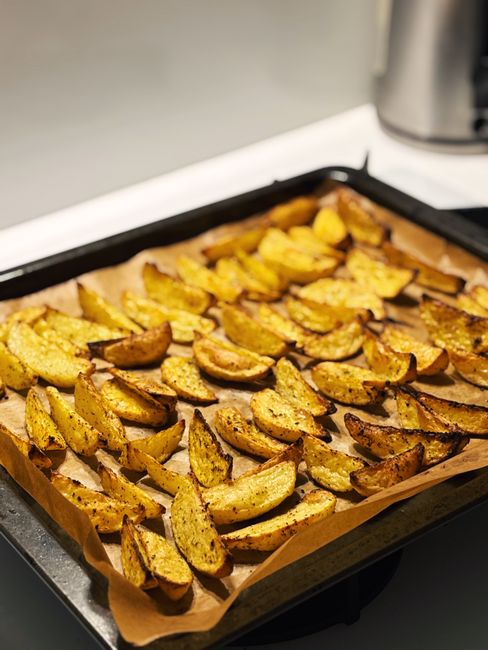
Air fryer potato wedges give you the best of both worlds in a single bite — a thick, shatter-crisp, deeply seasoned crust on the outside and a fluffy, steamy, baked-potato interior that no deep fryer can match. The forced convection does what an oven only approximates: it dehydrates the starchy surface into a golden, crackling shell while the dense flesh steams in its own moisture and turns light and fluffy. The skin-on cut holds the wedges together and adds a rustic chew, and a 30-minute soak in cold water leaches out the surface starch that causes sticking and uneven browning. Done right, these beat frozen wedges and restaurant wedges alike.
Why 400°F and 18–22 Minutes?
400°F (200°C) is the target for potato wedges because the dense, starchy flesh needs aggressive heat to cook through and crisp, and the surface needs sustained high heat to dehydrate into a crackling shell. At 375°F the wedges slowly dehydrate into leathery strips without ever getting truly crisp; at 425°F the pointed tips scorch before the thick centers cook through. The 18–22 minute window reflects how long it takes the dense flesh to transform from raw and starchy to fluffy and tender.
Pro tips
- Soak the cut wedges in cold water for 30 minutes to leach out surface starch — starch is what makes them stick together and burn unevenly
- Pat the soaked wedges bone-dry before seasoning; surface moisture is the enemy of any crisp edge
- Cut each potato into 8 uniform wedges so they finish at the same time and brown evenly
- Toss the wedges twice during cooking — at 8 and 14 minutes — so all three sides get a turn under the direct heat
- Leave the skin on for texture and to hold the wedges together; scrub it clean rather than peeling
How to Tell When It's Done
Potato wedges are done when the surfaces are deeply golden and crisp, the pointed tips are dark and crackling, and a fork pierces the thickest center with zero resistance — the interior should be fluffy and steamy, not dense or waxy. Unlike meat, there is no internal temperature to hit — this is a visual and tactile call. If the tips are black and the centers are still hard, the heat was too high or the wedges were cut unevenly. Tap a wedge — it should sound hollow and feel rigid.
Common mistakes
- Skipping the soak. Surface starch turns gummy instead of crisp; a 30-minute cold water soak is what gives you separate, evenly browned wedges.
- Overcrowding the basket. Touching wedges trap steam and the pile comes out limp; use a single layer with gaps and run two batches for a full load.
- Leaving the wedges wet. Surface moisture steams instead of crisps; pat them bone-dry after the soak before adding oil.
- Cooking at too low a temperature. Wedges need 400°F to dehydrate into a crackling shell; at 375°F they slowly turn leathery without ever crisping.
Serving Suggestions
Serve immediately while the crust is still crackling — wedges lose their crunch within minutes as trapped steam softens the shell. Salt them hot, then dunk them in ketchup, spicy mayo, ranch, or a garlic aioli. They are the natural partner for burgers, steak, and fried chicken, and they hold their own next to grilled sausages or fish.
Pairs well with: Hamburger Patties, Chicken Drumsticks
Times and temperatures verified against USDA FSIS safe minimum internal temperatures and manufacturer cooking charts (Ninja, Cosori, Instant Pot Vortex). Every air fryer runs slightly hot or cool — treat these as starting points and adjust ±2 minutes to taste.
Potato Wedges air fryer FAQ
Why do I need to soak potato wedges before air frying?
To leach out surface starch. Starch is what makes the wedges stick together and burn in uneven patches, and it forms a gummy layer on the surface instead of a crisp shell. A 30-minute soak in cold water removes enough starch to give you separate, evenly browned wedges with a clean, crackling crust. It is the single biggest upgrade you can make to homemade wedges.
Why are my air fryer potato wedges soggy?
Usually a skipped soak, wet wedges, or overcrowding. Without soaking, surface starch turns gummy instead of crisp. Wet wedges steam instead of crisp — pat them bone-dry after the soak. And overcrowding traps steam; cook in a single layer with gaps so the air can circulate around each wedge and crisp all sides.
Should I peel the potatoes for wedges?
No, leave the skin on. The skin holds the wedge together, adds a rustic chew, and crisps into a texture you cannot get from peeled potatoes. Scrub the potatoes thoroughly instead of peeling, and cut them into uniform wedges with the skin intact. Peeled wedges tend to fall apart and lack the textural contrast that makes skin-on wedges special.
What potatoes are best for air fryer wedges?
Russet potatoes, also called baking or Idaho potatoes. Their high starch content gives you the fluffy, baked-potato interior and the thick, crackling crust that defines a great wedge. Waxy varieties like red or Yukon gold stay dense and moist and never achieve the same fluffy-crisp contrast — save those for boiling or roasting.