How to Air Fry Cauliflower Florets
Source: USDA food safety data + manufacturer guidelines
AirFryerCharts · Compiled & reviewed ·
Avoid these 3 mistakes
The difference between crispy and soggy
See the 3 mistakes →
Step-by-step
- Preheat the air fryer to 375°F for 3 minutes. A hot basket creates the immediate sear that caramelizes the cut faces — a cold start lets the cauliflower steam in its own moisture before any browning happens.
- Cut one head of cauliflower into uniform 1½-inch florets, keeping them attached at the stem where possible. Uniform size is non-negotiable: small pieces burn before large ones soften.
- Pat the florets completely dry, then toss with 1 tablespoon of olive oil, ½ teaspoon of salt, and your chosen spice blend until evenly coated. The oil carries the seasoning and is what creates the crisp, charred edges.
- Arrange cut-side down in a single layer with gaps between florets. The flat faces need direct contact with the hot mesh to sear into those caramelized crusts; crowding kills the char.
- Air fry at 375°F for 10–12 minutes, resisting the urge to stir for the first 8 minutes so the cut faces can develop their crust. Shake the basket once at the 8-minute mark to roll the florets.
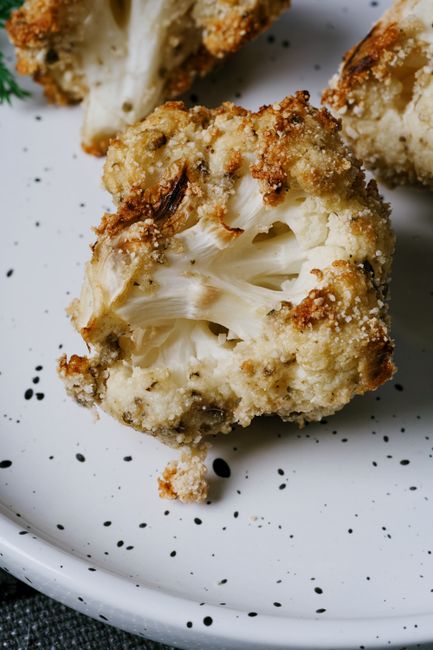
- Check at 10 minutes — the tips should be deeply browned, the cut faces caramelized, the stems fork-tender. Pull now for firmer texture, or give it 2 more minutes for deeper char.
Air fryer cauliflower is the vegetable that converts skeptics, turning a pale, bland raw floret into something deeply caramelized and nutty with crisp, charred edges and a tender, sweet center. The dense cauliflower head holds up to aggressive heat far better than softer vegetables, and the forced convection browns the exposed cut faces and the textured floret tips simultaneously, creating contrast in every bite — shatter-crisp edges giving way to a creamy, almost melting core. A tablespoon of oil and whatever spice blend you love is all it takes; the dry heat carries the seasoning into every crevice and caramelizes the cauliflower's natural sugars into a savory depth that steaming and boiling can never reach.
Why 375°F and 10–12 Minutes?
375°F (190°C) is the sweet spot for cauliflower because it is hot enough to trigger the Maillard browning on the cut faces and floret tips that creates the caramelized, nutty flavor, but not so hot that the textured tips burn before the dense stems soften. At 400°F the tips char to black while the stems stay raw and fibrous; at 350°F the florets slowly dehydrate and soften without ever browning. The 10–12 minute window lets the moisture cook out of the stems so they turn tender without going mushy.
Pro tips
- Cut florets to a uniform 1½-inch size — smaller pieces char to dust before the dense stems soften
- Pat the florets completely dry after washing; surface moisture steams instead of roasts and you lose the crisp edges
- Toss with just 1 tablespoon of oil per head — too much makes them greasy and soft rather than crisp
- Keep the florets cut-side down for the first 8 minutes so the flat faces sear into deep brown caramelized patches
- Toss with spice blends like za'atar, curry powder, or smoked paprika before cooking for flavor that bakes onto the surface
How to Tell When It's Done
Cauliflower is done when the floret tips are deeply browned with charred patches, the cut faces have developed dark caramelized crusts, and the stems yield easily when pierced with a fork. Unlike meat, there is no internal temperature to hit — this is a visual and tactile call. If the tips are black and the stems are still hard and pale, the heat was too high; if everything is soft and pale, you overcrowded the basket and steamed it instead of roasting.
Common mistakes
- Leaving the florets wet after washing. Surface water turns to steam and prevents crisping; pat them completely dry before oiling and seasoning.
- Overcrowding the basket. Piled florets trap steam and steam instead of roast; use a single layer with gaps between them.
- Cutting uneven floret sizes. Small pieces char to dust while large ones stay raw; aim for uniform 1½-inch florets.
- Cranking the heat above 400°F to speed things up. The tips burn before the dense stems soften; 375°F is the sweet spot for even browning.
Serving Suggestions
Serve immediately while the edges are still crisp — cauliflower softens as it sits. A squeeze of lemon, a shower of parmesan, or a drizzle of tahini sauce are the classic finishes that play off the caramelized sweetness. It makes a great side for grilled chicken or fish, and the charred florets are surprisingly good tossed into a salad or grain bowl.
Pairs well with: Chicken Breast (boneless), Salmon Fillet
Times and temperatures verified against USDA FSIS safe minimum internal temperatures and manufacturer cooking charts (Ninja, Cosori, Instant Pot Vortex). Every air fryer runs slightly hot or cool — treat these as starting points and adjust ±2 minutes to taste.
Cauliflower Florets air fryer FAQ
Do I need to blanch cauliflower before air frying?
No. Air frying raw florets directly gives you the best char and texture. Blanching adds moisture that fights against the crisping you want from the hot dry air — you would essentially be steaming it first, then trying to undo that with heat. Skip the blanch and let the dry heat do the work.
Why is my air fryer cauliflower mushy?
Usually wet florets or overcrowding. Surface moisture turns to steam the moment it hits the hot basket, and steam prevents the edges from crisping — pat the florets completely dry after washing. Overcrowding traps steam too; cook in a single layer with gaps so the air can circulate around each floret.
Should cauliflower be dry before air frying?
Yes, completely dry. After washing, pat the florets thoroughly with a towel. Surface water turns to steam in the hot basket, and steam is the opposite of the dry heat that creates crisp, charred edges. Wet cauliflower steams instead of roasts, giving you a soft, pale result with none of the caramelized flavor.
Can I air fry frozen cauliflower?
You can, but it will not crisp the way fresh does. Frozen cauliflower holds roughly 88% water and releases it fast, so it tends to come out softer and more steamed than roasted. For the best result, do not thaw it, bump the temperature to 400°F, and plan on 12–14 minutes with a mid-cook shake. Expect a roasted-but-soft texture rather than shatter-crisp edges.