How to Air Fry Satsumaimo (Japanese Sweet Potato)
Source: USDA food safety data + manufacturer guidelines
AirFryerCharts · Compiled & reviewed ·
Avoid these 3 mistakes
The difference between crispy and soggy
See the 3 mistakes →
Step-by-step
- Scrub the satsumaimo thoroughly under running water. Do not peel — the skin is the best part, turning papery and lightly charred in the air fryer, and it holds the caramelized interior together.
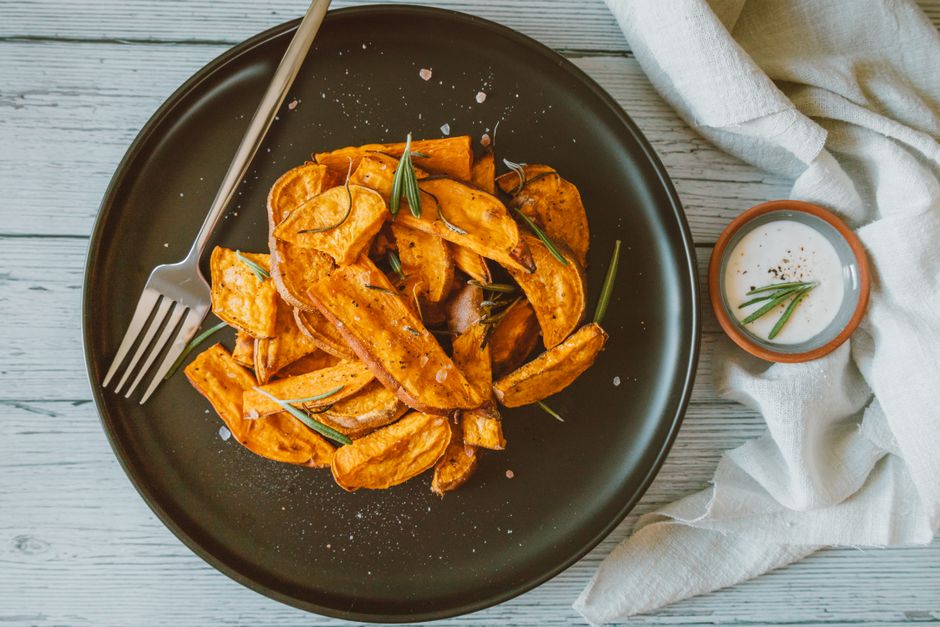
- For whole baked satsumaimo, prick the skin 6–8 times with a fork so steam can escape. For wedges, cut into 2 cm wedges and toss with 1 tsp of neutral oil and a pinch of salt — oil is what gives wedges their crisp edges.
- Preheat the air fryer to 390°F for 3 minutes. A hot basket starts the caramelization the moment the potato lands; a cold start slowly dehydrates the sugars and leaves the interior starchy.
- For whole: place directly on the basket, ideally in a single layer. For wedges: arrange in a single layer with small gaps — overlapping wedges steam at the contact points.
- Air fry at 390°F for 20–25 minutes (whole) or 15–18 minutes (wedges). For whole, turn once at the halfway mark for even charring. For wedges, shake the basket once at 10 minutes.
- Check at 20 minutes for whole — a fork should slide into the center with zero resistance, the skin should be papery and charred, and the potato should feel soft when squeezed (use a towel). For wedges, check at 15 minutes — the edges should be dark and caramelized, the centers tender.
Satsumaimo in the air fryer are what sweet potatoes should always have been — a caramelized, almost custard-soft interior under a dry, lightly charred skin, in half the time of an oven. The Japanese sweet potato is denser and sweeter than the orange American variety, and the air fryer's forced convection concentrates those sugars into something closer to dessert than a side dish. Twenty to twenty-five minutes at 390°F produces a fully caramelized potato with a creamy, flan-like interior and a skin that crackles when you bite it.

Why 390°F and 20–25 Minutes?
390°F (200°C) is the sweet spot for satsumaimo because it is hot enough to caramelize the high sugar content without burning the skin. At 375°F the sugars slowly dehydrate and the interior stays dense and starchy; at 425°F the skin scorches before the dense flesh fully softens. The 20–25 minute window covers medium 250–350 g potatoes; large 500 g ones need 30–35 minutes and a fork should pierce the center with zero resistance.
Pro tips
- Scrub but do not peel — the skin is the best part
- Wedges coated in oil get crisp edges; whole bakes get creamy centers
- A 400°F finish for 2 minutes deepens the caramelization
How to Tell When It's Done
Satsumaimo is done when the skin is lightly charred and papery, a fork or skewer slides into the thickest part with zero resistance, and the interior yields under gentle pressure like a baked custard. Color on the skin is the primary signal; an underdone satsumaimo will feel firm and resist the fork, while a perfect one will feel hollow and soft.
Common mistakes
- Peeling the skin. The skin is the best part — it turns papery and lightly charred and balances the very sweet interior. Scrub and leave it on.
- Running the heat too high. 425°F scorches the sugar-rich skin before the dense flesh softens; 390°F is the sweet spot for caramelization without burning.
- Undercooking. Satsumaimo is denser than a regular sweet potato and needs 20–25 minutes (whole) or 15–18 minutes (wedges) at 390°F. A fork should slide into the center with zero resistance.
- Overcrowding wedges. Touching wedges steam at the contact points and never crisp; arrange in a single layer with small gaps, or cook in two batches.
Serving Suggestions
Serve whole as a hand-warmer snack, split open with a pat of butter and a pinch of salt, or sliced into wedges with a soy-honey glaze. Satsumaimo is a classic Japanese winter street food (yaki-imo), a side to grilled fish or karaage, or a simple dessert on its own.
Pairs well with: Sweet Potato Fries, Karaage (Japanese Fried Chicken)
Times and temperatures verified against USDA FSIS safe minimum internal temperatures and manufacturer cooking charts (Ninja, Cosori, Instant Pot Vortex). Every air fryer runs slightly hot or cool — treat these as starting points and adjust ±2 minutes to taste.
Satsumaimo (Japanese Sweet Potato) air fryer FAQ
What is the difference between satsumaimo and American sweet potatoes?
Satsumaimo (Japanese sweet potato) has a reddish-purple skin and a pale yellow-cream flesh that is denser, drier, and noticeably sweeter than the orange-fleshed American sweet potato. The texture when roasted is closer to roasted chestnut or baked flan than the wet, fibrous texture of an American yam. The two are not interchangeable — satsumaimo's lower water content is exactly what makes it shine in the air fryer.
Do I need to peel satsumaimo before air frying?
No — the skin is the best part. It turns papery, lightly charred, and slightly bitter in a way that balances the very sweet interior. For whole baked satsumaimo, scrub thoroughly and leave the skin on. For wedges, you can peel if you prefer, but the skin-on version has a more interesting texture.
Why is my satsumaimo hard in the middle after air frying?
It needed more time. Satsumaimo is denser than a regular sweet potato, and a medium 300 g whole potato can take 25 minutes to fully soften at 390°F. A fork should slide into the center with zero resistance — if there is any pushback, give it another 5 minutes. Large 500 g potatoes can take 30–35 minutes.
Can I air fry satsumaimo at a higher temperature to cook it faster?
Not really. The sugar content in satsumaimo is high enough that temperatures above 400°F scorch the skin before the dense flesh fully softens. 390°F is the sweet spot — hot enough to caramelize the sugars, low enough to let the interior cook through. Cutting into wedges (15–18 minutes) is the legitimate way to speed it up.