How to Air Fry Hand Pies
Source: USDA food safety data + manufacturer guidelines
AirFryerCharts · Compiled & reviewed ·
Avoid these 3 mistakes
The difference between crispy and soggy
See the 3 mistakes →
Step-by-step
- Preheat the air fryer to 370°F for 3 minutes. A hot basket gives the pastry an immediate blast that sets the crust and the seal before the filling has time to boil and burst the seams.
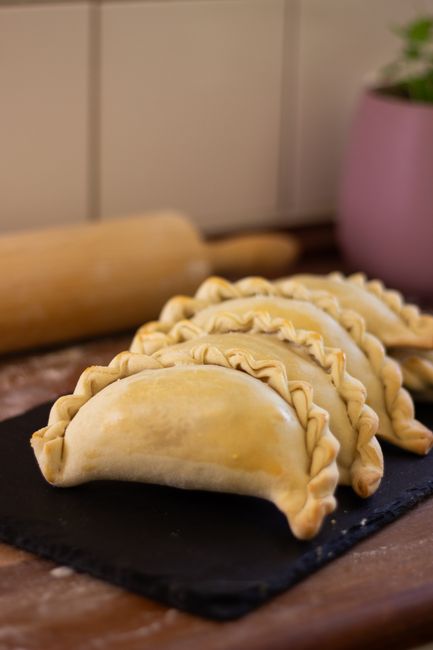
- Cut dough into rounds, spoon a tablespoon of filling onto one half of each, and fold over into a half-moon. Crimp the edges firmly with a fork to seal — a tight seal is what keeps the filling inside, so press hard and check for gaps.
- Cut one or two small slits in the top of each pie to vent steam. Without vents, the steam builds pressure and blows the seam open, dumping the filling into the basket and leaving you with an empty shell.
- Brush the tops with beaten egg and sprinkle with coarse sugar if you like. The egg wash gives the pastry its glossy, golden finish and the sugar adds a bakery-style crunch — skip the wash and the tops bake up pale and dull.
- Arrange the hand pies on a parchment-lined basket in a single layer with at least 1 inch between them. They puff as they bake, and any filling that leaks is far easier to clean off parchment than off the mesh.
- Air fry at 370°F for 10–12 minutes. Check at 10 minutes — the pastry should be deep golden top and bottom, with the filling bubbling through the vent. Lift one pie to confirm the underside is golden before pulling the batch.
Air fryer hand pies give you flaky, golden, pocket-sized pastries in about 12 minutes, with crackly, layered crusts sealed around a warm, bubbling filling of fruit or jam — no deep frying, no oven preheat. The forced convection browns the pastry into a crisp shell while the filling heats through and thickens, and because hand pies are sealed and crimped, they hold their filling far more cleanly than an open tart. A slit cut in the top vents steam so the crust stays crisp instead of soggy, and an egg wash gives the pastry its glossy, bakery-style shine. Use refrigerated pie crust or biscuit dough, crimp the edges firmly, and bake on parchment to catch any filling that leaks.
Why 370°F and 10–12 Minutes?
370°F (188°C) is the temperature that browns the pastry and sets the seal while the filling heats through. The dough needs enough heat to puff and flake before the filling boils and bursts the seams, and 370°F balances that; at 390°F or higher the crust browns and scorches before the filling warms, while below 360°F the pastry goes pale and the filling turns the underside soggy. The 10–12 minute window lets the crust fully cook through and brown evenly — check at 10, since thin pastry burns quickly in the intense circulating air.
Pro tips
- Crimp the edges firmly with a fork — a tight seal is what keeps the filling inside as it boils
- Cut a vent slit in the top of each pie so steam can escape instead of bursting the seam
- Brush with beaten egg for a glossy, golden finish; unbrushed tops bake up pale and dull
- Bake on parchment to catch any leaked filling, which is far easier to clean than scrubbing burnt fruit off the basket mesh
- Do not overfill — a tablespoon of filling per pie is enough; more and they rupture in the heat
How to Tell When It's Done
Hand pies are done when the pastry is deep golden brown on top and bottom, the crimped edges are cooked through and no longer doughy, and the filling is bubbling visibly through the vent slit. Tap the crust — it should feel firm and sound slightly hollow. Pale, soft edges mean underbaked dough that will tear and leak; dark brown or black spots mean overbaked. The bottom should be golden and crisp, not pale or wet, so lift one to check before pulling the batch.
Common mistakes
- Overfilling the pies. Too much filling builds pressure and bursts the seam — stick to a single tablespoon per hand pie and crimp firmly.
- Skipping the vent slits. Trapped steam blows the crust open and dumps the filling; always cut one or two slits in the top.
- Omitting the egg wash. Without it the pastry bakes up pale and dull; the wash is what gives the glossy, golden finish.
- Biting in straight from the air fryer. The filling reaches a near-boiling temperature and will scald you; cool the pies for at least 10 minutes first.
Serving Suggestions
Let the hand pies cool for at least 10 minutes before biting in — the filling reaches a near-boiling temperature inside and will scald you immediately out of the air fryer. Dust with powdered sugar, or drizzle with a simple glaze once cooled. Serve warm with coffee or plate them with croissants for a pastry spread.
Pairs well with: Croissants
Times and temperatures verified against USDA FSIS safe minimum internal temperatures and manufacturer cooking charts (Ninja, Cosori, Instant Pot Vortex). Every air fryer runs slightly hot or cool — treat these as starting points and adjust ±2 minutes to taste.
Hand Pies air fryer FAQ
How do I keep the filling from leaking out of hand pies?
Three things: do not overfill (a single tablespoon per pie is enough), crimp the edges firmly with a fork to seal, and cut a vent slit in the top to release steam. Overfilling and missing vents build pressure that blows the seam open, so press the seal hard and always slit the top before air frying.
Do I need to vent hand pies before air frying?
Yes. Cutting one or two small slits in the top lets steam escape as the filling heats. Without vents, the steam builds pressure inside the sealed crust and blows the seam open, dumping the filling into the basket and leaving you with an empty, split shell.
Why are my hand pies pale on top?
You skipped the egg wash. A beaten egg brushed over the pastry before baking is what gives hand pies their glossy, golden-brown finish; without it, the crust bakes up pale and dull. For extra crunch, sprinkle coarse sugar over the wet egg wash before air frying.
Can I use refrigerated pie crust for air fryer hand pies?
Yes, refrigerated pie crust or biscuit dough both work well. Cut rounds, fill, fold, crimp, vent, and air fry at 370°F for 10–12 minutes. Store-bought dough bakes up flaky and golden and saves the time of making pastry from scratch, with nearly identical results.