How to Air Fry Canned Cinnamon Rolls
Source: USDA food safety data + manufacturer guidelines
AirFryerCharts · Compiled & reviewed ·
Avoid these 3 mistakes
The difference between crispy and soggy
See the 3 mistakes →
Step-by-step
- Preheat the air fryer to 360°F for 3 minutes. A hot basket gives the dough the immediate blast it needs to puff and rise before the sugar has time to melt out and burn onto the liner.
- Line the basket with a parchment round trimmed to fit. Cinnamon sugar melts and caramelizes into a sticky syrup as it cooks, and without a barrier it cements the rolls to the basket and ruins them.
- Arrange the rolls in a single layer with at least 1 inch between them. They expand to nearly double as they bake, and crowding fuses the edges into a doughy mass that cannot brown.
- Air fry at 360°F for 9–11 minutes. Check at 9 minutes — canned dough browns fast and the line between golden and burnt is about 60 seconds. The tops should be deep golden and the spirals puffed.
- If the tops brown before the centers feel set, lay a small piece of foil loosely over the rolls and continue for 1–2 more minutes. This shields the sugar from direct heat while the dough finishes cooking through.
- Let the rolls rest on the liner for 2 minutes, then drizzle or spread the icing while still hot. The residual heat melts the icing into a glaze that soaks into the coils; waiting too long leaves it sitting on top like frosting.
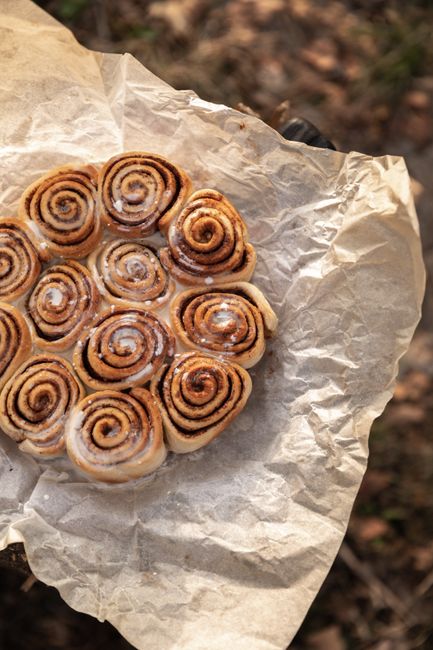
Air fryer cinnamon rolls turn a tube of refrigerated dough into a bakery-style breakfast in under 12 minutes — golden, puffed spirals with crackly caramelized edges and gooey, molten cinnamon-sugar centers, with no oven preheat required. The forced convection browns the outer coils and crisps the edges while the inside stays soft and pillowy, a result a slow oven often fails to deliver before the whole roll dries out. Because canned dough is par-baked and lean on fat, it cooks through quickly and browns aggressively, which is exactly why the air fryer excels here. A parchment liner keeps the sticky sugar from gluing the rolls to the basket, and the icing goes on while they are still hot.
Why 360°F and 9–11 Minutes?
360°F (182°C) is the temperature that lets canned dough rise, set, and brown in the right sequence. Canned cinnamon roll dough is fully leavened and ready to puff the instant it hits heat, so a moderate temperature gives the coils time to expand and cook through before the sugar burns. At 400°F the exterior crusts and scorches while the inner layers stay doughy and raw; below 325°F the rolls dry out before browning. The 9–11 minute window covers most tube brands, but start checking at 9 — canned dough crosses from golden to burnt fast.
Pro tips
- Line the basket with parchment — the melted cinnamon sugar hardens into caramel that is nearly impossible to scrub off a bare basket
- Space rolls at least an inch apart; they puff to double their size and merge if crowded
- Start checking at 9 minutes. Canned dough browns fast, and golden-to-burnt is about a 60-second window
- Tent loosely with foil if the tops brown before the centers set; it shields the sugar while the dough finishes cooking
- Frost while warm so the icing melts into a glaze that seeps into the coils
How to Tell When It's Done
Cinnamon rolls are done when the tops are deep golden brown and the spirals have puffed to nearly double their original height with the layers visibly separated. Press the center of a roll — it should feel set and springy, not squishy or raw underneath. The sugar filling will be bubbling at the edges and starting to caramelize. If the tops are brown but the centers feel doughy when pressed, your heat was too high; tent loosely with foil and give it another minute at a lower temperature to cook the middle through.
Common mistakes
- Baking on a bare basket. Melted cinnamon sugar turns to hard caramel that cements the rolls to the mesh — always use a parchment liner.
- Cranking the heat to 375°F or higher. The sugary tops burn while the dense centers stay raw; 360°F gives the dough time to cook through before the sugar scorches.
- Crowding the rolls together. They double in size as they puff, and touching rolls fuse into a doughy clump that cannot brown on the joined edges.
- Saving the icing for later. Spread it while the rolls are hot so it melts into a glaze; cold rolls leave the icing sitting in a pale clump on top.
Serving Suggestions
Spread the included icing over the rolls while they are still hot so it melts into a glossy glaze that seeps into the coils. They are best eaten immediately, warm and sticky, with coffee or cold milk. For a brunch spread, plate them alongside crisp croissants and fresh fruit to balance the sweetness.
Pairs well with: Croissants
Times and temperatures verified against USDA FSIS safe minimum internal temperatures and manufacturer cooking charts (Ninja, Cosori, Instant Pot Vortex). Every air fryer runs slightly hot or cool — treat these as starting points and adjust ±2 minutes to taste.
Canned Cinnamon Rolls air fryer FAQ
Can I cook refrigerated tube cinnamon rolls in the air fryer?
Yes, that is exactly what this method is for. Any standard tube of canned cinnamon rolls works at 360°F for 9–11 minutes on a parchment-lined basket. Check at 9 minutes because brands vary in dough thickness and sugar content, and canned dough crosses from done to burnt quickly.
Why are my cinnamon rolls raw in the middle but burnt on top?
The temperature was too high or the rolls were crowded. At 400°F the sugary tops scorch before the dense inner layers cook. Keep to 360°F, space the rolls at least an inch apart, and if tops brown early, tent loosely with foil for the last 1–2 minutes to finish the centers.
Do I need to use the icing that comes in the tube?
You can, and it works well spread over the hot rolls so it melts into a glaze. You can also swap in cream cheese icing, a powdered sugar and milk drizzle, or nothing at all. Just apply any icing while the rolls are still warm so it flows into the coils.
Should I flip cinnamon rolls while air frying?
No, do not flip them. Cinnamon rolls need to rise upward undisturbed, and flipping crushes the puffed spirals and dumps the molten filling out. The forced air browns the tops evenly; if the bottoms need help, a loose foil tent on top buys the centers time to cook through.