How to Air Fry Frozen Hot Pockets
Source: USDA food safety data + manufacturer guidelines
AirFryerCharts · Compiled & reviewed ·
Avoid these 3 mistakes
The difference between crispy and soggy
See the 3 mistakes →
Step-by-step
- Preheat the air fryer to 380°F for 3 minutes. The moderate heat crisps the pastry shell while giving time for heat to reach the dense center filling.
- Place the frozen hot pockets in a single layer with space between them. Do not use the crisping sleeve — it is for the microwave only and blocks the hot air in the basket.
- Air fry at 380°F for 9 to 11 minutes, flipping the pockets once at the 5-minute mark. That flip crisps the underside, which otherwise stays pale against the basket floor.
- Check at 9 minutes — the shell should be golden and crisp, and a thermometer poked into the center filling should read at least 165°F with no cold spot.
- Give it 1 to 2 more minutes only if the center is still cool, watching the crust closely. The shell scorches fast once the filling is finally hot.
- Rest the hot pocket for a full 2 minutes before biting. The filling is molten and that pause is the difference between enjoyment and a burned mouth.
Frozen hot pockets are the microwave's most famous failure, and the air fryer fixes everything wrong with them. The microwave leaves the notorious cold center and a leathery, partially rubberized crust; forced hot air crisps the entire pastry shell into a flaky, golden cylinder while heating the dense filling all the way through to a safe, molten center. The challenge is real: the thick, doughy pocket needs enough time for heat to reach the middle without the outside burning, and the air fryer's circulating heat does what radiation cannot. No crisping sleeve required. In 9 to 11 minutes from frozen you get a crunchy, steaming hot pocket with an even, lava-hot center and none of the cold-dough surprise.
Why 380°F and 9–11 Minutes?
380°F (190°C) is the right setting for hot pockets. The thick dough needs moderate heat with enough time for it to penetrate to the dense center filling, and 380°F crisps the pastry shell over the 9 to 11 minute window while the inside thaws and reaches a safe, molten temperature. At 400°F the crust scorches before the center is hot; at 350°F the dough slowly dries into a tough, pale shell while the filling stays cool. The moderate heat matches the browning of the outside to the heating of the inside, which is the entire challenge of a hot pocket.
Pro tips
- Discard the crisping sleeve — it blocks the hot air. The frozen pocket goes straight into the basket
- Hold the heat at 380°F. Higher temperatures scorch the crust before the dense center is hot
- Flip once at the 5-minute mark. The underside stays pale against the basket
- Confirm 165°F in the center filling. The crust browns before the notorious cold spot is hot
- Rest 2 full minutes before biting. The filling is molten and that pause prevents the classic hot pocket mouth burn
How to Tell When It's Done
A hot pocket is done when the pastry shell is an even golden brown and crisp across every surface, and the filling inside is steaming hot all the way through to the exact center — the notorious cold spot. Poke a thermometer into the middle of the filling; it should read at least 165°F. The shell should feel firm and flaky, not doughy or soft. If the outside is golden but the center is still cool, lower the heat 25 degrees and give it 2 to 3 more minutes. Pull the moment the center is hot, before the crust dries out.
Common mistakes
- Using the microwave crisping sleeve. It blocks the circulating hot air; discard it and put the pocket straight into the basket.
- Cranking the heat to speed things up. The crust scorches before the dense center is hot; 380°F for the full time is what reaches a molten middle.
- Skipping the flip. The underside stays pale against the basket; one flip at 5 minutes crisps both sides evenly.
- Biting in immediately. The filling is molten and the classic hot pocket burn is real; rest it 2 full minutes first.
Serving Suggestions
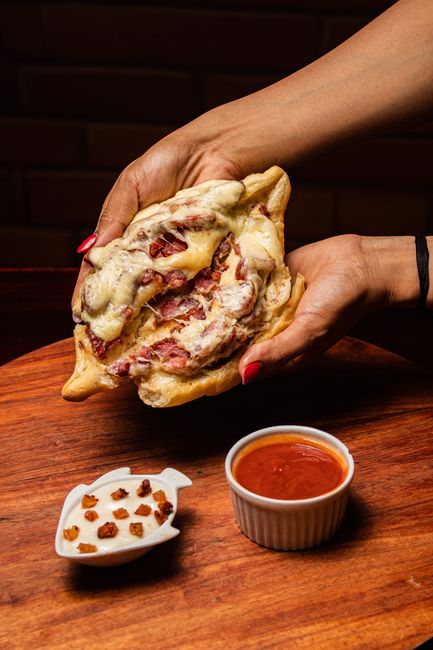
Let it rest for 2 full minutes before biting — the filling is genuinely molten and the classic hot pocket mouth burn is real. Eat it as a hand-held meal on its own, or dunk it in marinara, ranch, or pizza sauce depending on the variety. They are a self-contained lunch or late-night snack and need no side, though chips or fruit round out a quick meal. Eat it warm; once it cools, the filling resets and the crust loses its just-crisped flake.
Pairs well with: Frozen Tater Tots, Frozen French Fries
Times and temperatures verified against USDA FSIS safe minimum internal temperatures and manufacturer cooking charts (Ninja, Cosori, Instant Pot Vortex). Every air fryer runs slightly hot or cool — treat these as starting points and adjust ±2 minutes to taste.
Frozen Hot Pockets air fryer FAQ
Do I use the crisping sleeve in the air fryer?
No — discard it. The cardboard crisping sleeve is designed for the microwave and blocks the circulating hot air in the air fryer. Put the frozen pocket straight into the basket or on the rack, and the forced convection crisps every surface far better than the sleeve ever could.
How do I avoid the cold center in a hot pocket?
Use moderate heat and enough time. At 380°F for 9 to 11 minutes, the circulating air heats the dense filling all the way through. Check the center with a thermometer — it should read at least 165°F. If the crust is golden but the middle is still cool, lower the heat and add time rather than cranking the temperature, which would burn the outside.
Should I thaw hot pockets before air frying?
No, cook them straight from frozen. Thawing softens the dough and releases moisture from the filling, which soaks the crust and turns it soggy. Frozen pockets hit the hot basket, the shell crisps, and the dense filling heats through as the pastry sets — that sequence only works starting from frozen.
Why is the crust on my hot pocket tough instead of flaky?
Usually heat that is too low or cooking too long. At 350°F the dough slowly dehydrates into a tough, leathery shell; at 380°F it crisps and flakes properly. Overcooking at any temperature also toughens the crust, so pull the pocket the moment the center is hot, not a minute later.
More Frozen
 400°F
400°F
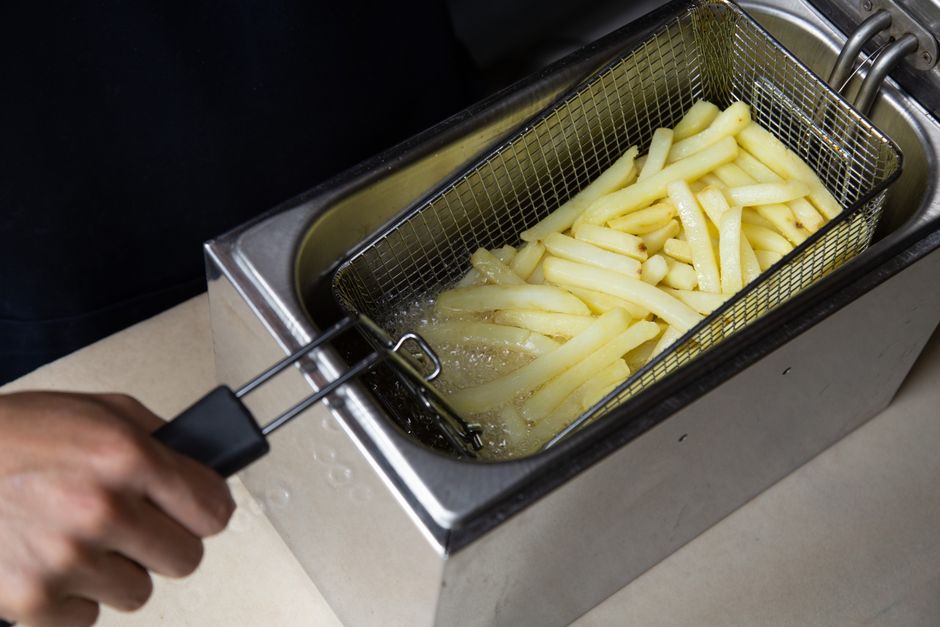
Frozen French Fries
No oil needed — they're pre-fried. The classic air-fryer win.
 400°F
400°F
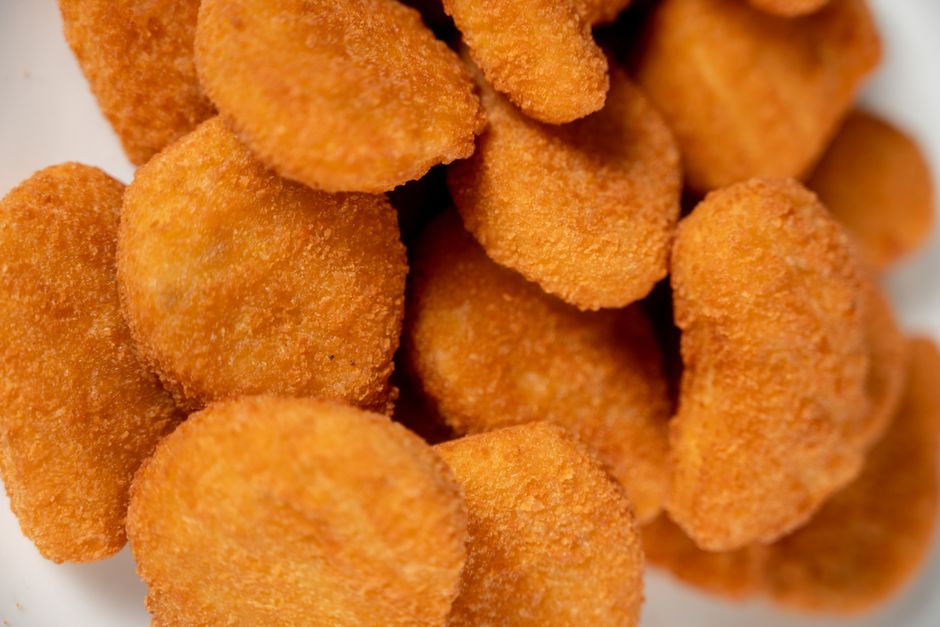
Frozen Chicken Nuggets
Better than oven — fast, even, crunchy. USDA: reheat ready-to-eat poultry to 165°F.
 380°F
380°F
Frozen Pizza Rolls
No more exploded rolls. The air fryer's greatest party trick.