How to Air Fry Frozen Fish Sticks
Source: USDA food safety data + manufacturer guidelines · USDA safe temp: 145°F
AirFryerCharts · Compiled & reviewed ·
Avoid these 3 mistakes
The difference between crispy and soggy
See the 3 mistakes →
Step-by-step
- Preheat the air fryer to 400°F for 3 minutes. A hot basket crisps the breading instantly and stops the moisture from the fish from soaking back into the coating.
- Arrange the frozen fish sticks in a single layer with small gaps between them. Overlapping traps steam and leaves pale, soggy bands where the sticks touched.
- Air fry at 400°F for 10 to 12 minutes, pulling the basket to flip the sticks gently at the 6-minute mark. That flip exposes the underside so every surface crisps and browns.
- Check at 10 minutes — the breading should be deep gold and the fish should flake when twisted with a fork, with no glassy, rubbery center.
- For food safety, push an instant-read thermometer into the thickest stick; it should read 145°F. The fish should flake cleanly and look fully opaque.
- Serve right away. The breading loses its crunch within minutes as steam escapes, so fish sticks are at their best the instant they leave the basket.
Frozen fish sticks are the dependable weeknight workhorse, and the air fryer rescues them from their two usual fates: the soggy, pale batons of the microwave and the dried-out cardboard of a 25-minute oven bake. The breading, designed for the freezer, crisps up into a golden, crackling shell under forced hot air while the mild white fish inside stays flaky and moist right to a safe 145°F. Because the sticks are thin and uniform, the hot air circulates around every surface, so you skip the greasy half-sheet pan and the mid-bake flip. Straight from the freezer, 10 to 12 minutes turns out crunchy, tender fish sticks that taste closer to the fish-and-chips shop than the box.

Why 400°F and 10–12 Minutes?
400°F (200°C) is right for breaded fish sticks. The coating needs high heat to crisps and brown before the moisture from the fish saturates it, and 400°F pushes the thin batons to a safe 145°F internal in 10 to 12 minutes without overcooking. At 375°F the breading dries slowly into a pale, cardboard shell while the fish leaks water; at 425°F the crust browns before the center thaws, leaving you with a crisp outside and cold, raw fish inside. The thin profile of the sticks is why 400°F works — they cook through almost as fast as the coating crisps.
Pro tips
- Cook straight from frozen — thawing releases water that soaks the breading and you get soggy sticks
- Preheat for 3 minutes. A hot basket sets the coating into a crisp shell instantly
- Flip gently at the 6-minute mark and not before. The breading needs time to set, and rough handling tears it off
- Confirm 145°F in the thickest stick. The coating browns before the fish is safe, so color alone is not reliable
- Serve the instant they are done. The breading softens fast as steam escapes
How to Tell When It's Done
Fish sticks are done when the breading is an even, deep golden brown across every surface and feels crisp and rigid, and the fish inside flakes easily when you twist a fork in it, with no translucent, rubbery center. Slide an instant-read thermometer into the thickest stick — it should read 145°F. If the coating is golden but the fish still looks glassy and resists flaking, give them 2 more minutes. Overdone fish turns dry and cottony, so pull them the moment the interior flakes cleanly.
Common mistakes
- Thawing the sticks first. Thawing releases moisture that soaks the breading and turns it soggy; cook them straight from frozen so the coating crisps as the fish thaws.
- Flipping too early. The breading needs the first 6 minutes to set; handling them sooner tears the coating off and leaves bare fish.
- Overcrowding the basket. Touching sticks trap steam and leave pale, soggy bands; keep them in a single layer with gaps.
- Trusting color for safety. The breading browns before the fish is done — confirm 145°F internal or that the thickest stick flakes cleanly with no glassy center.
Serving Suggestions
Serve immediately while the breading still crackles. Tartar sauce is the classic dip — lemon, capers, and mayo cut the richness — but malt vinegar, cocktail sauce, or a squeeze of fresh lemon all work. Pile them next to fries or coleslaw for a fish-and-chips plate, tuck them into a toasted roll with lettuce and tartar sauce for a quick sandwich, or break them up over a green salad. They are best eaten hot; the coating softens as they sit.
Pairs well with: Frozen French Fries, Frozen Tater Tots
Times and temperatures verified against USDA FSIS safe minimum internal temperatures and manufacturer cooking charts (Ninja, Cosori, Instant Pot Vortex). Every air fryer runs slightly hot or cool — treat these as starting points and adjust ±2 minutes to taste.
Frozen Fish Sticks air fryer FAQ
Do I need to add oil to frozen fish sticks?
Usually not — the breading already contains enough fat to crisps and brown at 400°F. A single light mist deepens the color if they look pale and dry, but soaking them makes the coating greasy and prone to scorching. Cook them dry from frozen for the best crunch and the least smoke in the basket.
Should I thaw fish sticks before air frying?
No, cook them straight from frozen. Thawing releases moisture that soaks into the breading and turns it soggy before it can crisps; the frozen coating sets into a crisp shell the moment it hits the hot basket, and the fish thaws and cooks through at the same time.
How do I know the fish is cooked safely?
Color is not enough — the breading browns before the fish is fully done. Either twist a fork in the thickest stick and confirm it flakes easily with no translucent center, or check with an instant-read thermometer that the thickest piece reads 145°F in the middle. The juices should be opaque, not glassy.
Why is the breading falling off my fish sticks?
Usually from flipping too early or too roughly. The coating needs the first 5 to 6 minutes to set before you disturb it; flip once, gently, at the 6-minute mark. Handling them too soon tears the breading off in patches and leaves you with bare fish.
More Frozen
 400°F
400°F
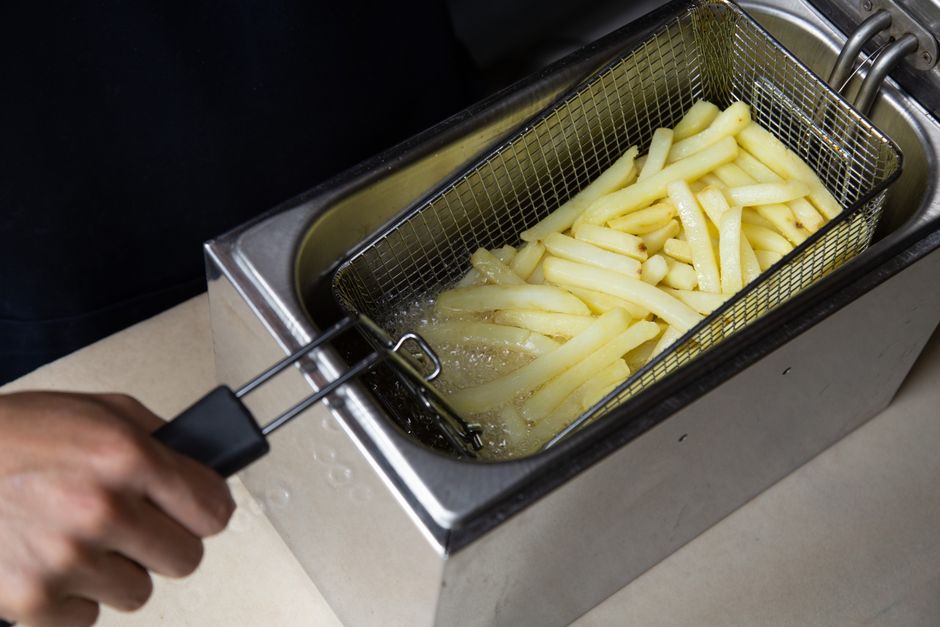
Frozen French Fries
No oil needed — they're pre-fried. The classic air-fryer win.
 400°F
400°F
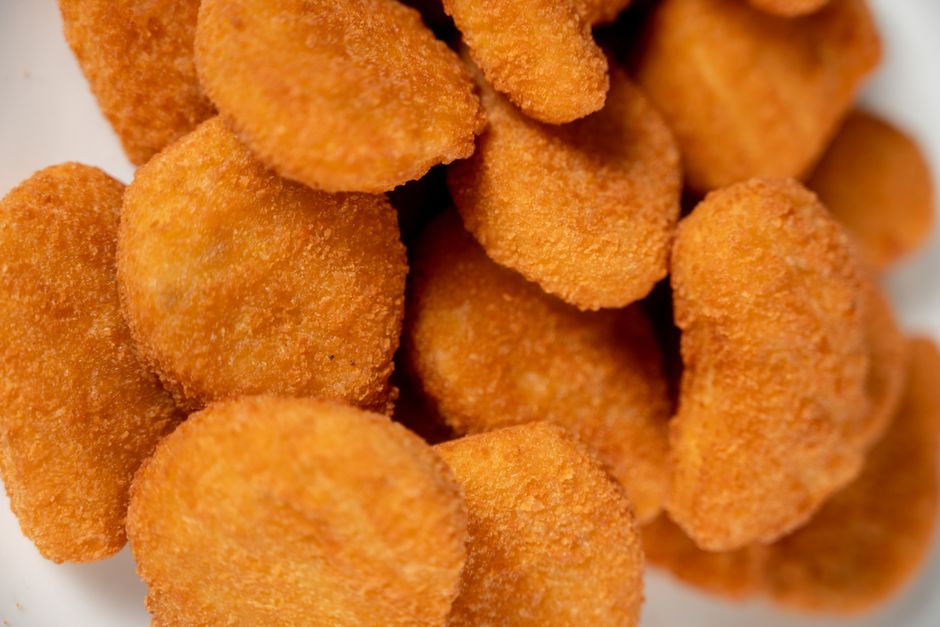
Frozen Chicken Nuggets
Better than oven — fast, even, crunchy. USDA: reheat ready-to-eat poultry to 165°F.
 380°F
380°F
Frozen Pizza Rolls
No more exploded rolls. The air fryer's greatest party trick.